Movement of Ash
“The Movement of Ash” marks an important starting point in the narrative of my trace-based work. In this piece, I mixed burnt ash with animal glue and added my own visual language onto the traditional frame of painting. Ash is a substance that already proves something has disappeared, yet at that time, I was still working in a hand-drawn manner—a method that foregrounds human will and control.
The resulting traces were not so much expressions of nature’s flow as they were residues shaped by human perception and composition. This work, therefore, reveals the tension between the natural flow and human control. It is an expression of a time when my desire had not yet fully reconciled with nature.
Looking back now, although this work dealt with traces, they were not natural traces but artificially reproduced ones. While it fell short of philosophical completion, “The Movement of Ash” posed a philosophical question
“Do I seek to dominate this trace, or to follow it?”
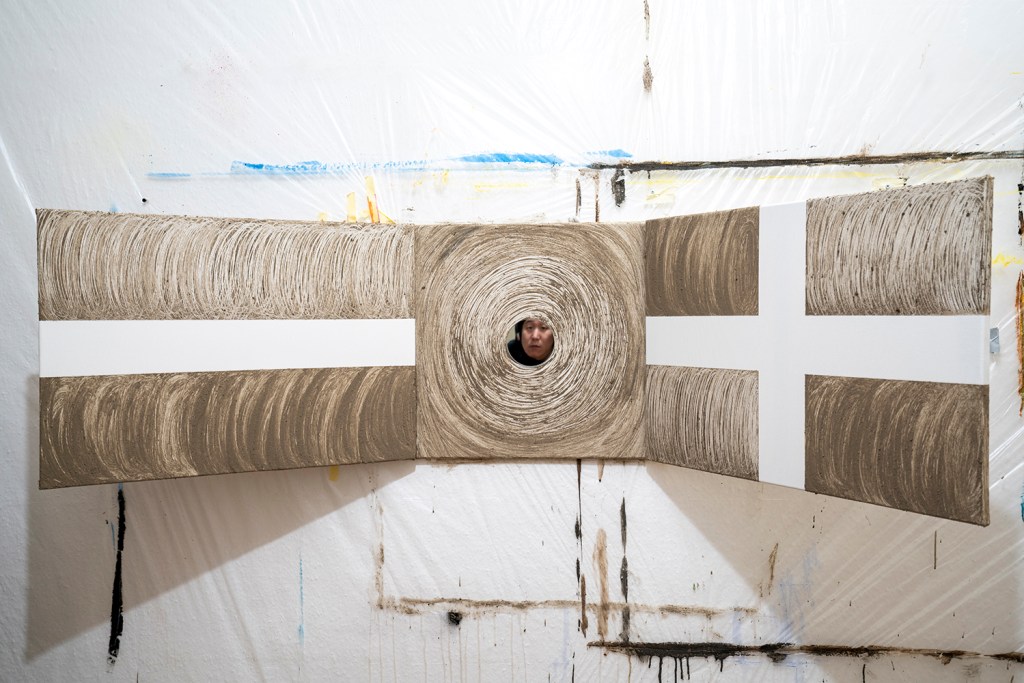
– CLICK IMAGE –
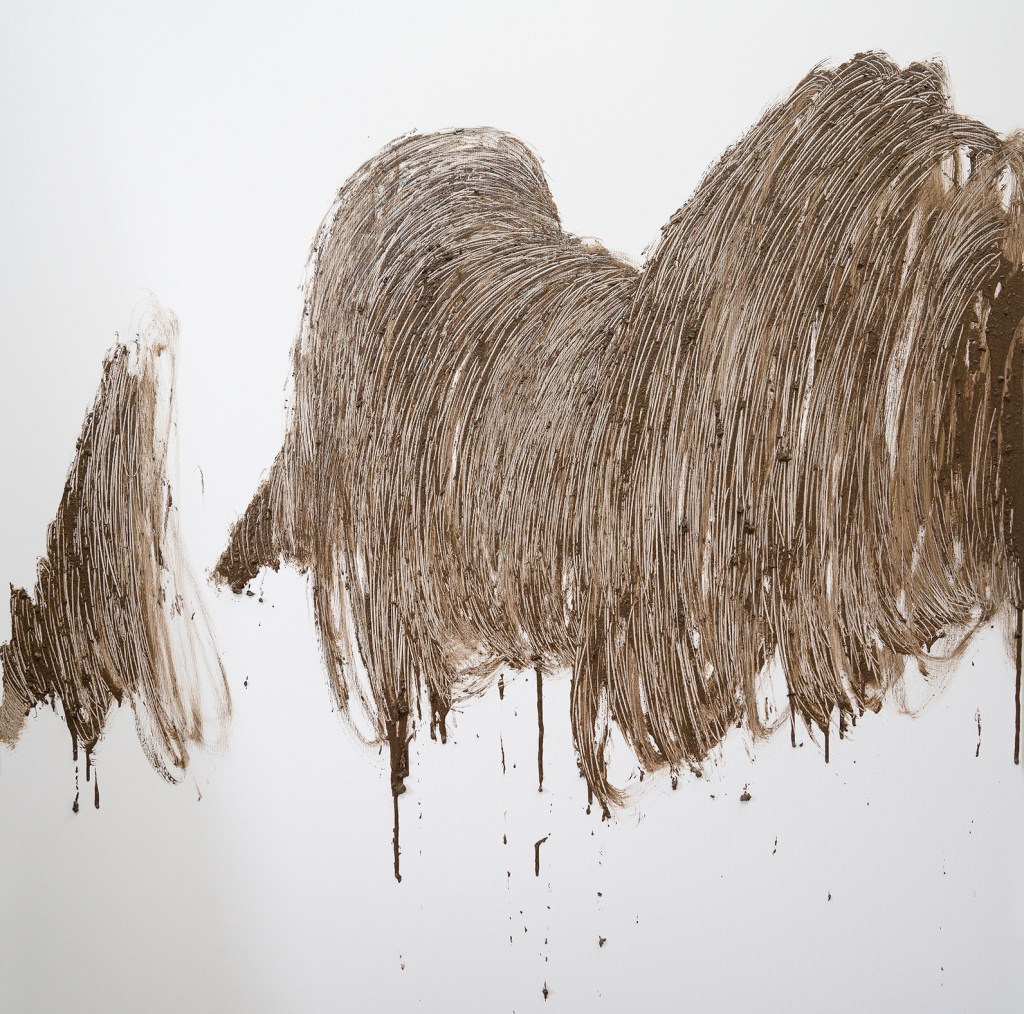
The movement of ash 재의 움직임 / 150cm X 150cm / Animal Bone Glue and Ash on Canvas / 2023
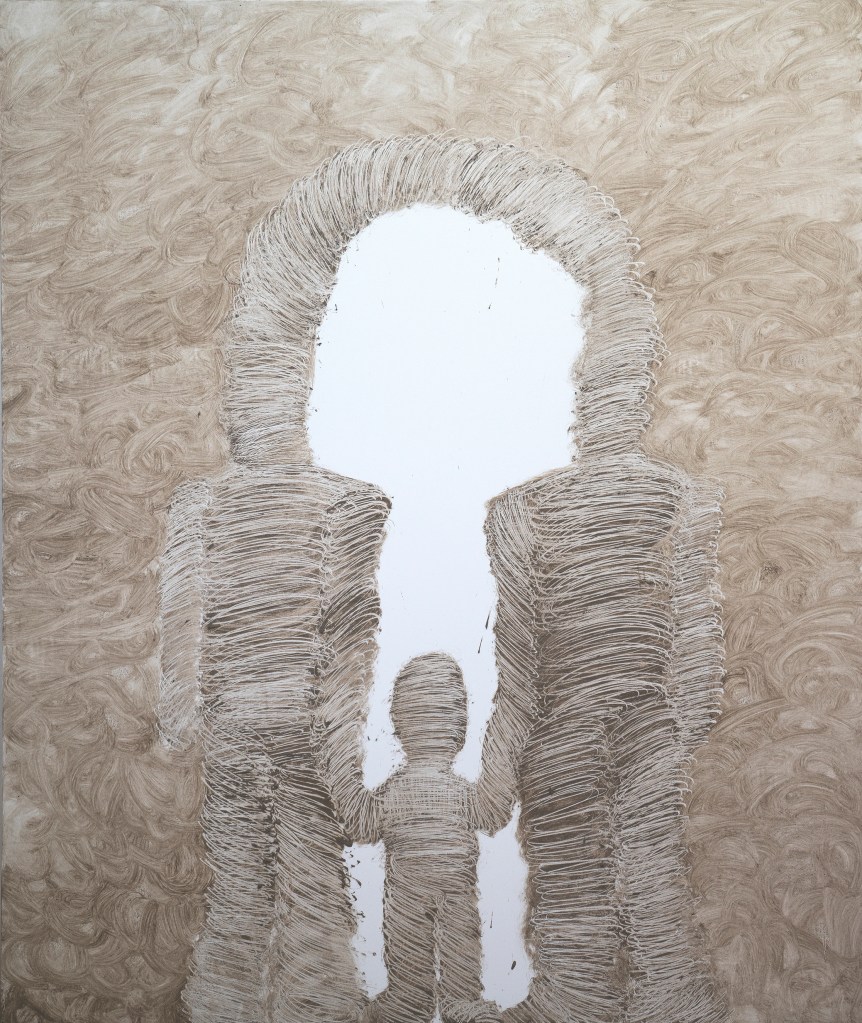
The movement of ash 재의 움직임 : family / 190cm X 160cm / Animal Bone Glue and Ash on Canvas / 2023 / Düsseldorf
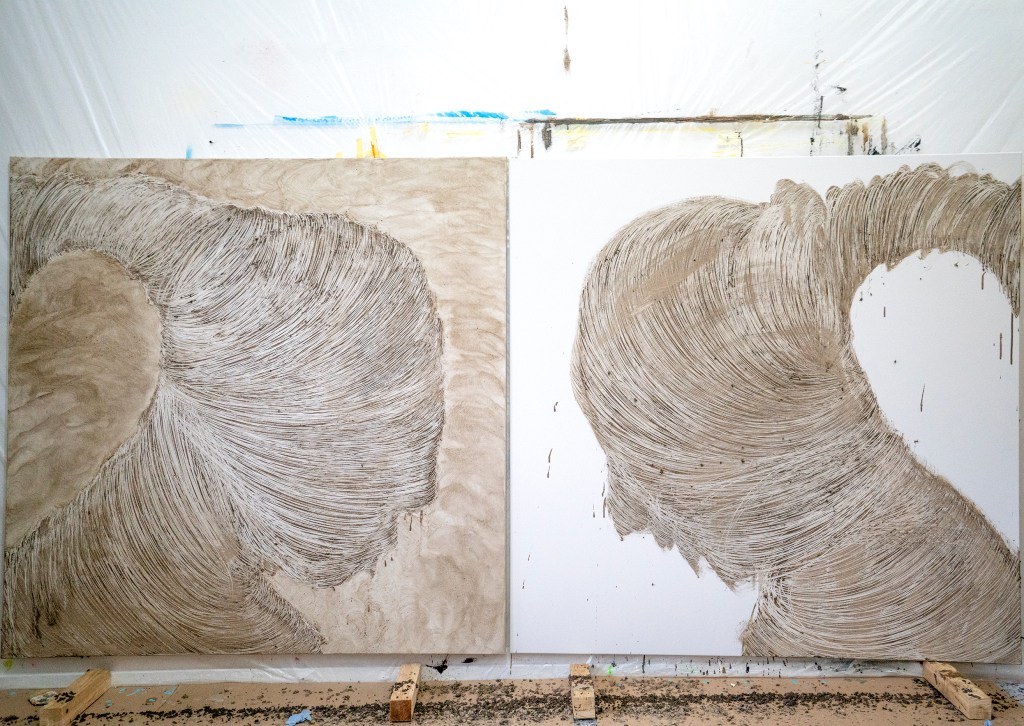
The movement of ash 재의 움직임 / 150cm X 150cm (2) / Animal Bone Glue and Ash on Canvas / 2023
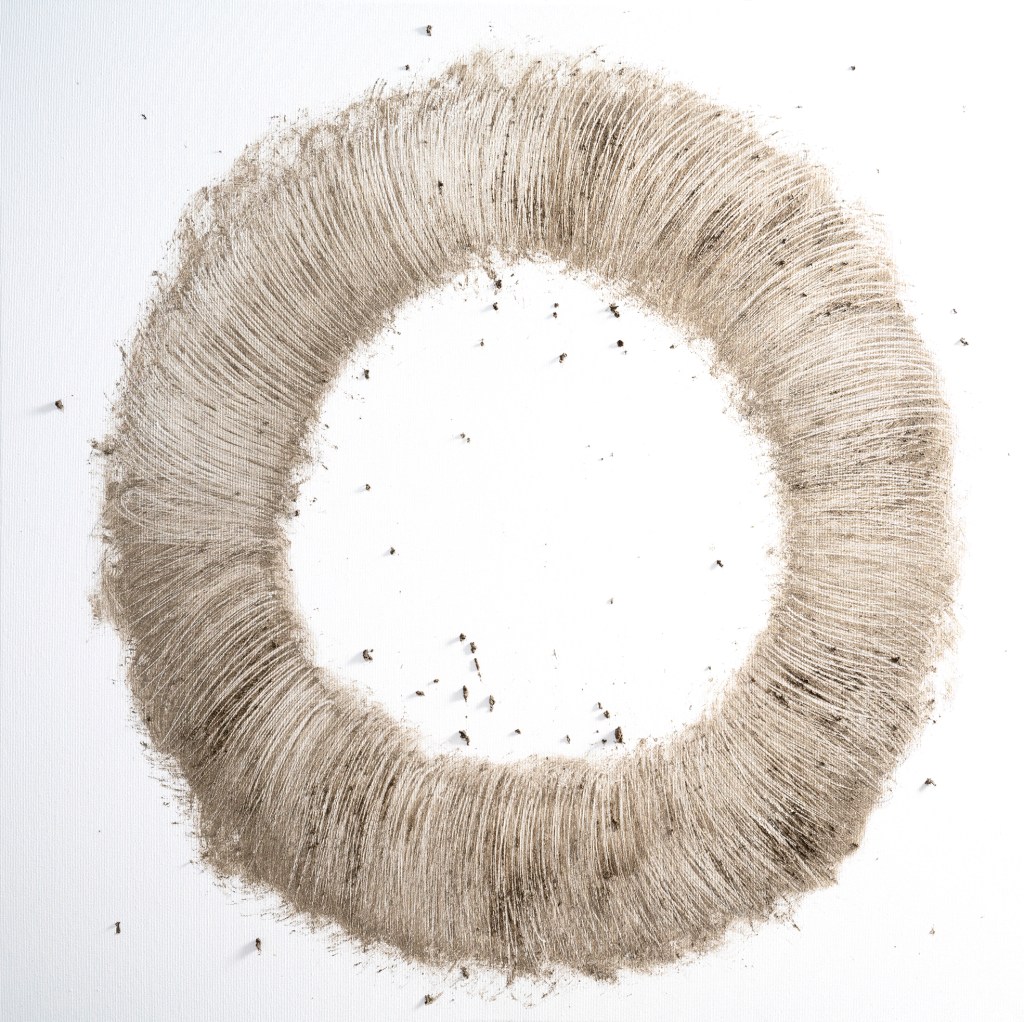
The movement of ash 재의 움직임 / 75cm X 75cm / Animal Bone Glue and Ash on Canvas / 2023
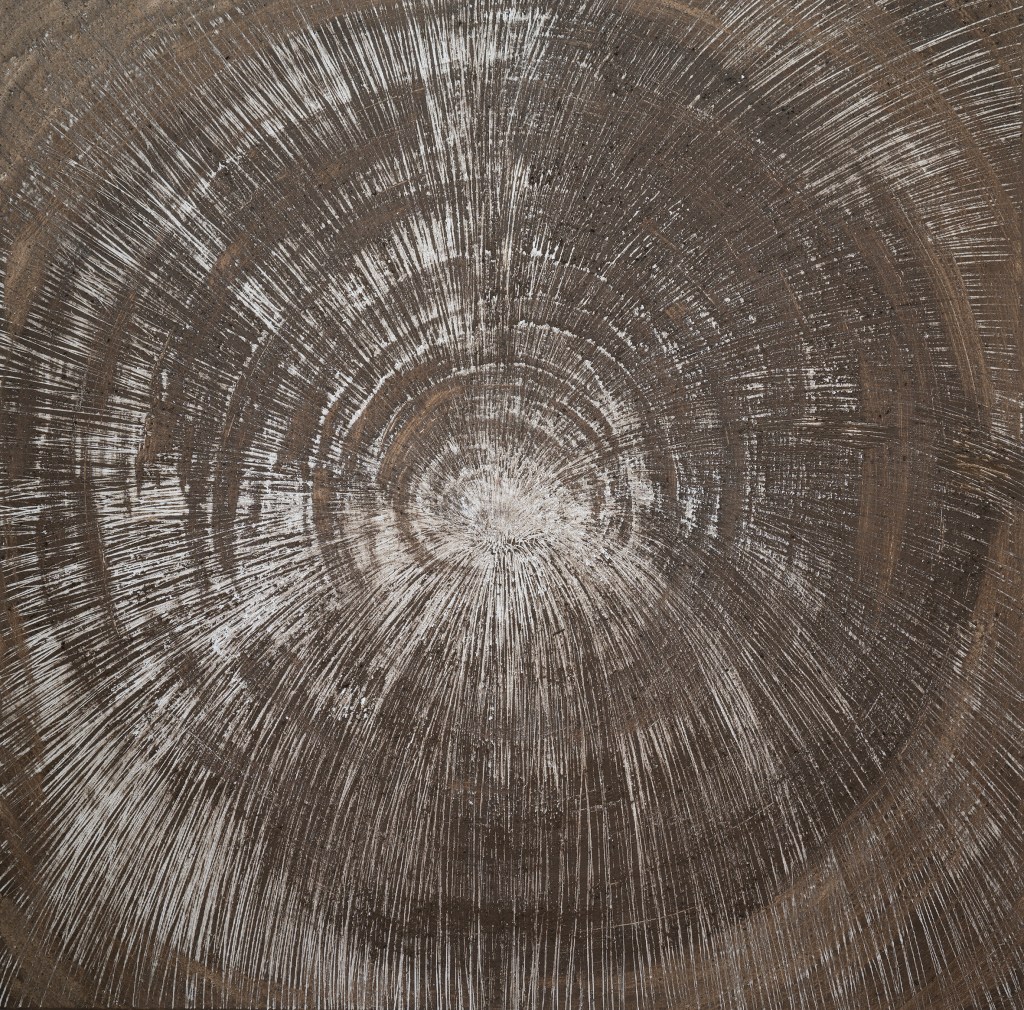
The movement of ash 재의 움직임 / 100cm X 100cm / Animal Bone Glue and Ash on Canvas / 2023
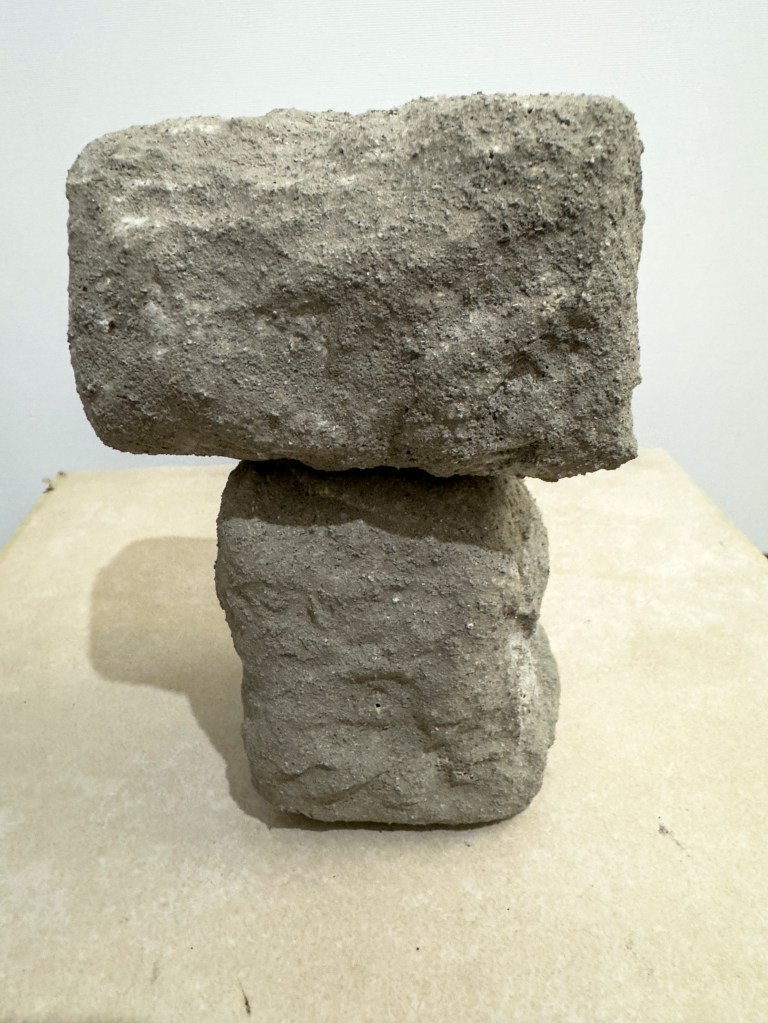
untitled / 20cm X 20cm / Ash, bone glue, vacuum packed lotus and date seed inside object / 2024
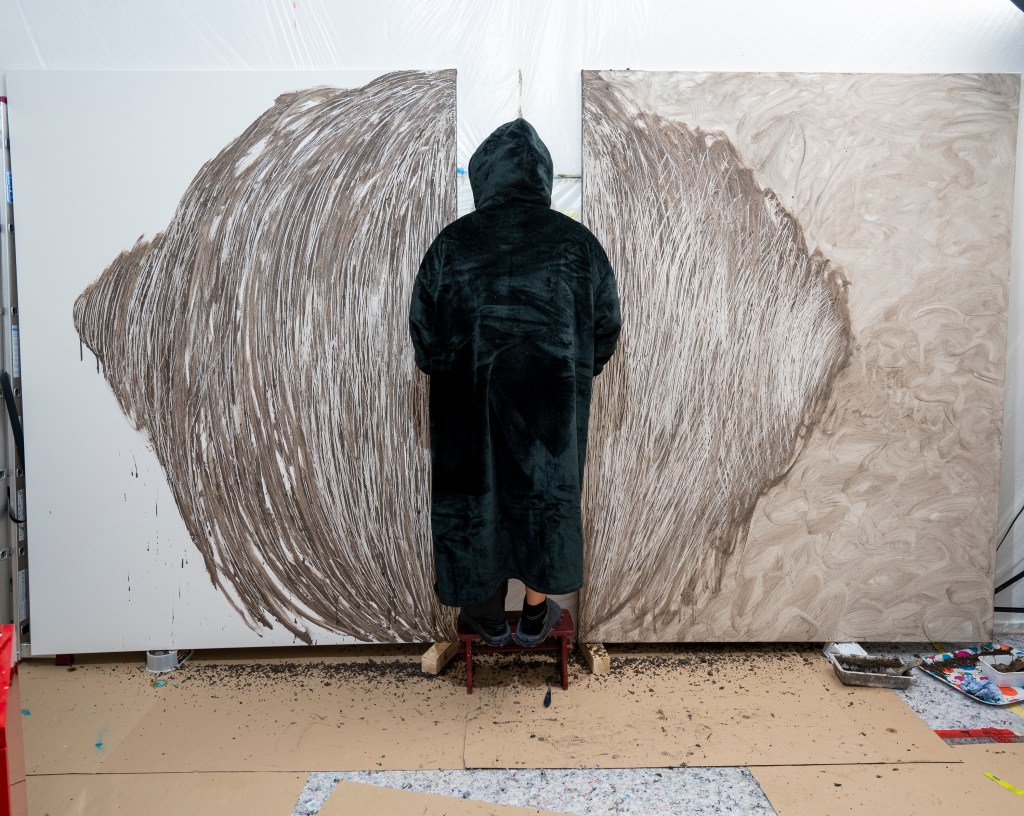
The movement of ash 재의 움직임 / 200cm X 160cm (2) / Animal Bone Glue and Ash on Canvas / 2023
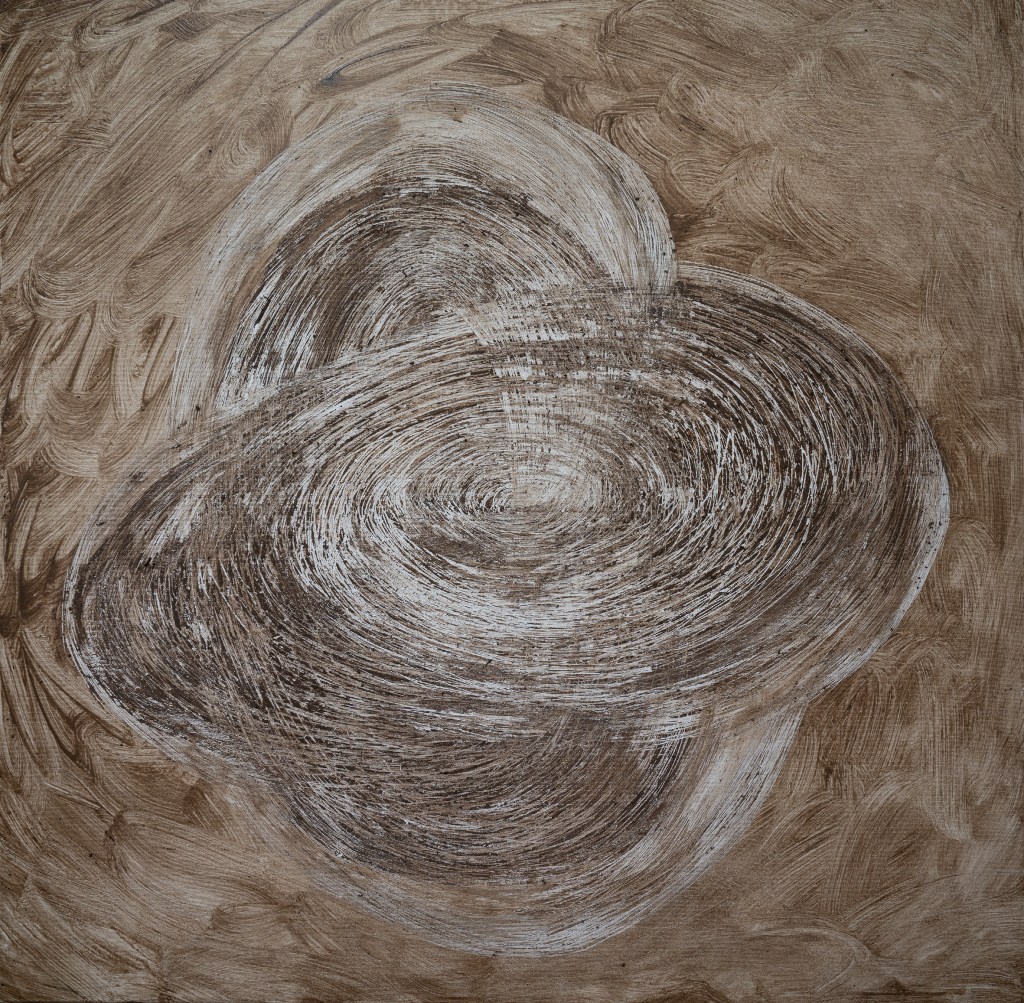
The movement of ash 재의 움직임 / 100cm X 100cm / Animal Bone Glue and Ash on Canvas / 2023
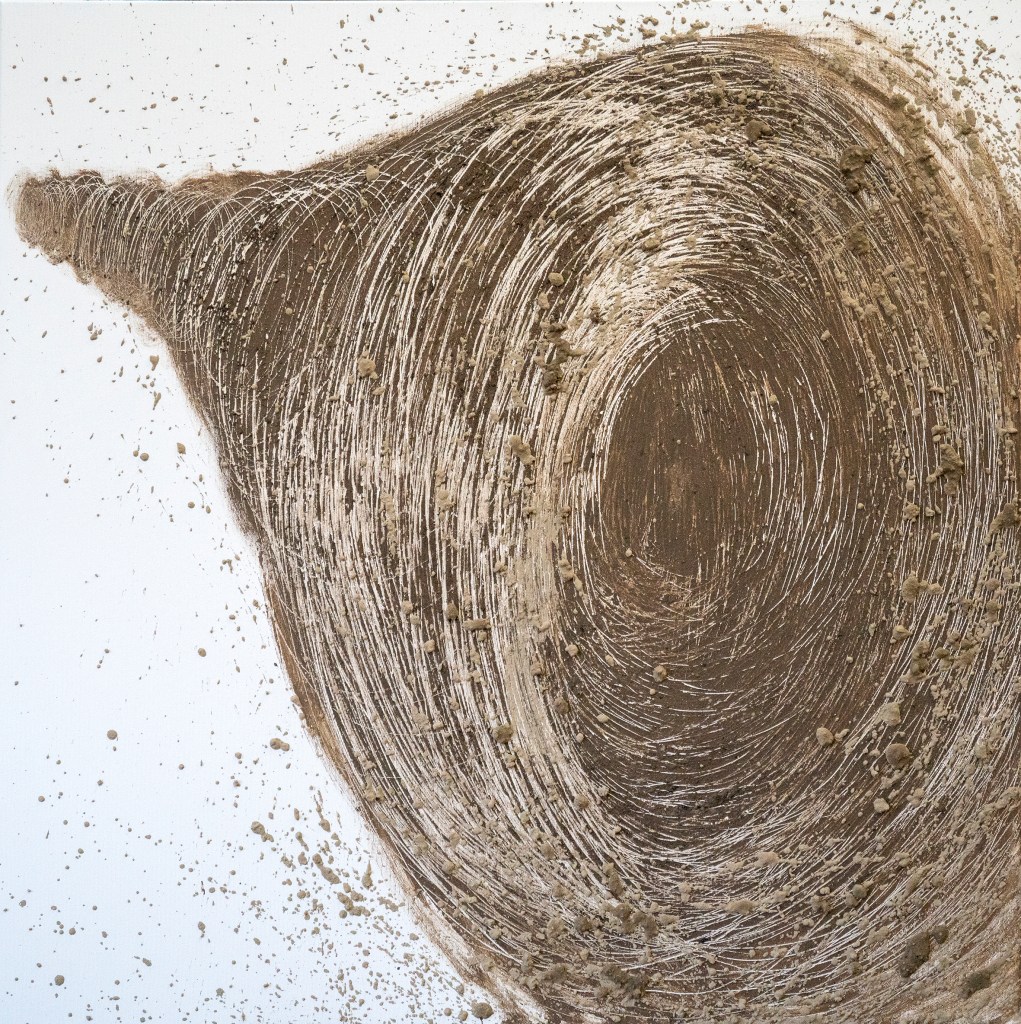
The movement of ash 재의 움직임 / 100cm X 100cm / Animal Bone Glue and Ash on Canvas / 2024
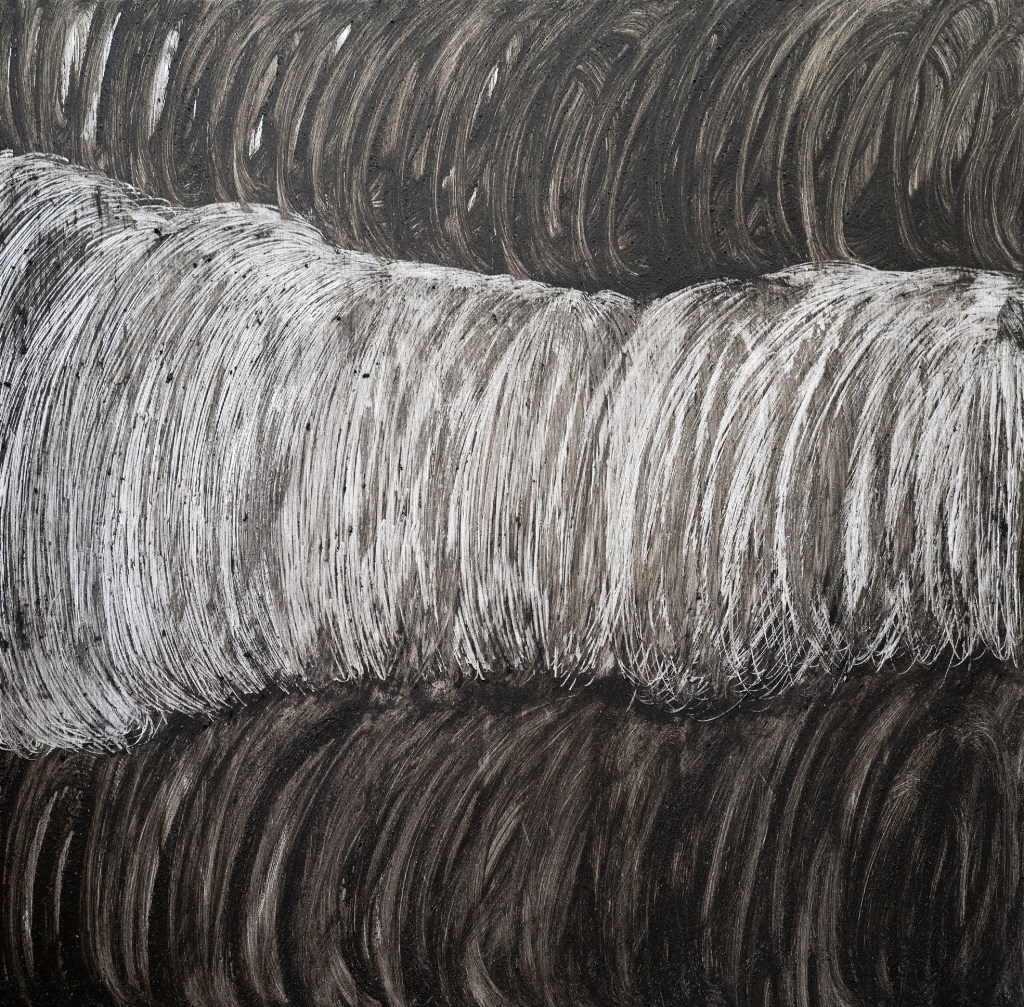
The movement of ash 재의 움직임 / 100cm X 100cm / Animal Bone Glue, Charcoal Ash on Canvas / 2023
한글
재의 움직임
‘재의 움직임’은 나의 흔적 작업의 서사에서 중요한 출발점이다. 나는 이 작업에서 불에 탄 재와 아교를 섞어 기존 회화의 틀 위에 나의 언어를 더했다. 재는 이미 무언가가 사라졌음을 증명하는 물질이지만, 이 시기의 나는 여전히 손으로 그리는 방식 “즉 인간의 의지와 통제를 전면에 둔 방식” 에 머물러 있었다.
그 흔적은 자연의 흐름이라기보다는 인간의 감각과 구성이 개입된 잔류물이다. 그래서 이 작업은 자연의 흐름과 인간의 통제 사이의 긴장을 드러낸다. 그것은 나의 욕망이 아직 자연과의 완전한 화해에 이르지 못한 시기의 표현이다.
지금 돌이켜보면, 이 작업은 ‘흔적’ 을 다뤘지만, 그 흔적은 자연의 흔적이 아닌 인위적으로 ‘재현된 흔적’ 이었다. 그렇기에 이 작업은 철학적 완성에는 미치지 못했지만, ‘재의 움직임’ 은 하나의 철학적 질문이었다
“나는 이 흔적을 지배하려는가, 아니면 따라가려는가?”
Deutsch
Die Bewegung der Asche
„Die Bewegung der Asche“ bildet einen wichtigen Ausgangspunkt in der Erzählung meiner spurenbasierten Arbeiten. In dieser Arbeit mischte ich verbrannte Asche mit Knochenleim und fügte meine eigene Bildsprache dem traditionellen Rahmen der Malerei hinzu. Asche ist ein Material, das das Verschwinden von etwas bereits bezeugt – dennoch arbeitete ich zu dieser Zeit noch in einer handgeführten Weise, also in einer Methode, die den menschlichen Willen und die Kontrolle in den Vordergrund stellt.
Die entstandenen Spuren waren weniger Ausdruck eines natürlichen Flusses als vielmehr Rückstände, die durch menschliche Wahrnehmung und Komposition geformt wurden. Diese Arbeit offenbart somit die Spannung zwischen natürlichem Fluss und menschlicher Kontrolle. Sie ist Ausdruck einer Phase, in der mein inneres Verlangen noch nicht in voller Versöhnung mit der Natur stand. Im Rückblick erkenne ich, dass diese Arbeit sich zwar mit Spuren beschäftigte, diese jedoch nicht natürlichen Ursprungs, sondern künstlich reproduziert waren. Auch wenn sie keine philosophische Vollendung erreichte, stellte „Die Bewegung der Asche“ eine philosophische Frage
„Will ich diese Spur beherrschen – oder ihr folgen?“
 Yohan Koo 구 요한